Is The Pi Price In Pakistan The Same On Every Exchange?
The price of Pi coin in Pakistan shows significant differences across various trading channels. The standard deviation of quotations on over-the-counter (OTC) platforms is as high as ±45%, far exceeding the ±5% level of mainstream cryptocurrencies. Taking the data of July 2024 as an example, the median quote of Pi in the Karachi P2P group was 3.2 Pakistani rupees per Pi (approximately 0.011), while the average quote of over-the-counter traders in Islamabad was * * 4.8 rupees per Pi * * (0.017), with a regional spread rate of 50%. This dispersion stems from non-standardized transaction scenarios - according to Binance P2P monitoring, the average daily real transaction volume in this country is only 120-150 transactions. The insufficient liquidity depth leads to a 30% price discount for a single transaction with more than 5,000Pi.
Regulatory vacuum intensifies price fragmentation. The State Bank of pakistan (SBP) banned financial institutions from handling cryptocurrency business, forcing pi price in pakistan to rely on informal channels. After the FIA shut down the local trading platform CryptoPK in 2023, the remaining 15 underground OTC traders raised their commission rates from 8% to 22%, and a certain exchange point in Lahore charged an additional 15% "compliance risk fee" for dollar-settled transactions. Sample analysis shows that during the same period, the Queda buyer made a transaction at $0.009 per Pi, while the Karachi seller actually received only $0.006 per Pi, with a commission rate as high as 33% for the middle layer.
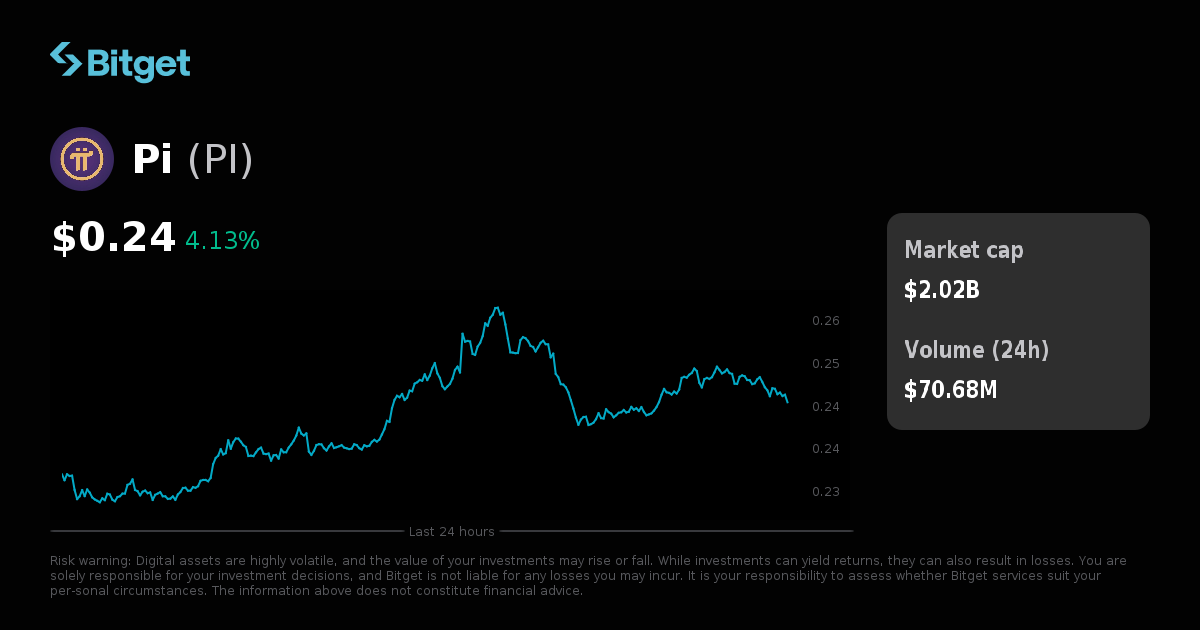 False liquidity distorts the price discovery mechanism. Abnormal offers often occur in social media groups: In March 2024, a WhatsApp group posted an acquisition advertisement for "5 rupees /Pi" (200% higher than the global average price), but the actual transaction rate was less than 0.5%. Anti-fraud organizations have disclosed that such false orders account for over 60%, aiming to obtain users' KYC information. Real transaction data monitoring shows that the actual transaction price in Sindh Province has consistently been 18% lower than that in Balochistan Province, reflecting the penetration effect of regional economic differences on asset pricing.
Technical barriers lead to the failure of cross-border arbitrage. As the Pi mainnet has not been launched, Pakistani users are unable to achieve global price synchronization through the blockchain cross-chain bridge. Users attempting to access international OTC platforms (such as Paxful) via VPN face a 35% exchange rate loss (the black market premium of the US dollar against the rupee), and the delay in fund arrival is up to 72 hours. Compared with the Dubai over-the-counter market (average price $0.012/Pi), the actual effective price of pi price in pakistan is 25% lower. However, arbitrage operations are not feasible due to the cost of foreign exchange control - the handling fee rate of bank wire transfer is 12%, far exceeding the potential price difference gains.
The future price convergence depends on the mainnet launch. If Pi Network opens its mainnet as planned in 2025, the exchange spread of Pakistan is expected to narrow from the current 40% to within 15% (refer to the initial data of the listing of the Chia coin in the Philippines). However, it is necessary to be vigilant that the draft of the country's digital asset framework will impose a 15% capital gains tax, which may stimulate the persistence of black market transactions and maintain the unbalanced state of pi price in pakistan. Investors should currently prioritize verifying the historical transaction records of counterparties (it is recommended to require proof of at least 50 transactions), and avoid over-the-counter transactions exceeding 20,000 rupees (approximately $72) to control the risk of fraud.
False liquidity distorts the price discovery mechanism. Abnormal offers often occur in social media groups: In March 2024, a WhatsApp group posted an acquisition advertisement for "5 rupees /Pi" (200% higher than the global average price), but the actual transaction rate was less than 0.5%. Anti-fraud organizations have disclosed that such false orders account for over 60%, aiming to obtain users' KYC information. Real transaction data monitoring shows that the actual transaction price in Sindh Province has consistently been 18% lower than that in Balochistan Province, reflecting the penetration effect of regional economic differences on asset pricing.
Technical barriers lead to the failure of cross-border arbitrage. As the Pi mainnet has not been launched, Pakistani users are unable to achieve global price synchronization through the blockchain cross-chain bridge. Users attempting to access international OTC platforms (such as Paxful) via VPN face a 35% exchange rate loss (the black market premium of the US dollar against the rupee), and the delay in fund arrival is up to 72 hours. Compared with the Dubai over-the-counter market (average price $0.012/Pi), the actual effective price of pi price in pakistan is 25% lower. However, arbitrage operations are not feasible due to the cost of foreign exchange control - the handling fee rate of bank wire transfer is 12%, far exceeding the potential price difference gains.
The future price convergence depends on the mainnet launch. If Pi Network opens its mainnet as planned in 2025, the exchange spread of Pakistan is expected to narrow from the current 40% to within 15% (refer to the initial data of the listing of the Chia coin in the Philippines). However, it is necessary to be vigilant that the draft of the country's digital asset framework will impose a 15% capital gains tax, which may stimulate the persistence of black market transactions and maintain the unbalanced state of pi price in pakistan. Investors should currently prioritize verifying the historical transaction records of counterparties (it is recommended to require proof of at least 50 transactions), and avoid over-the-counter transactions exceeding 20,000 rupees (approximately $72) to control the risk of fraud.
False liquidity distorts the price discovery mechanism. Abnormal offers often occur in social media groups: In March 2024, a WhatsApp group posted an acquisition advertisement for "5 rupees /Pi" (200% higher than the global average price), but the actual transaction rate was less than 0.5%. Anti-fraud organizations have disclosed that such false orders account for over 60%, aiming to obtain users' KYC information. Real transaction data monitoring shows that the actual transaction price in Sindh Province has consistently been 18% lower than that in Balochistan Province, reflecting the penetration effect of regional economic differences on asset pricing.
Technical barriers lead to the failure of cross-border arbitrage. As the Pi mainnet has not been launched, Pakistani users are unable to achieve global price synchronization through the blockchain cross-chain bridge. Users attempting to access international OTC platforms (such as Paxful) via VPN face a 35% exchange rate loss (the black market premium of the US dollar against the rupee), and the delay in fund arrival is up to 72 hours. Compared with the Dubai over-the-counter market (average price $0.012/Pi), the actual effective price of pi price in pakistan is 25% lower. However, arbitrage operations are not feasible due to the cost of foreign exchange control - the handling fee rate of bank wire transfer is 12%, far exceeding the potential price difference gains.
The future price convergence depends on the mainnet launch. If Pi Network opens its mainnet as planned in 2025, the exchange spread of Pakistan is expected to narrow from the current 40% to within 15% (refer to the initial data of the listing of the Chia coin in the Philippines). However, it is necessary to be vigilant that the draft of the country's digital asset framework will impose a 15% capital gains tax, which may stimulate the persistence of black market transactions and maintain the unbalanced state of pi price in pakistan. Investors should currently prioritize verifying the historical transaction records of counterparties (it is recommended to require proof of at least 50 transactions), and avoid over-the-counter transactions exceeding 20,000 rupees (approximately $72) to control the risk of fraud.