EV Charging for Hotels and Retail Sites Selecting the Right Charger Mix
Hotels and retail properties serve drivers with very different parking times. A guest may stay overnight, an employee may park for a full shift, and a shopper may leave within an hour. A charger mix based on those dwell times can serve more users and control electrical demand better than a single power level deployed across every bay.
Segment users before choosing equipment
Estimate arrivals, dwell time, energy need, and willingness to move a vehicle for each group. Overnight hotel guests can often use managed AC charging. Staff may use lower-power AC charging with access rules. Short-stay visitors may value a limited number of faster DC chargers. The site does not need to give every bay the same output when the users do not have the same requirement.
Use occupancy and parking data, not only room or store count. Check weekend and seasonal peaks, event traffic, delivery vehicles, and future fleet use. Decide whether charging is an amenity, a paid service, a loyalty benefit, or a separate business because that choice changes payment, support, and reporting needs.
Protect the building load
Hotels and retail sites already have variable loads from cooling, kitchens, lifts, refrigeration, lighting, and tenant equipment. Review interval data and available electrical capacity before setting charger quantities. Managed charging can reduce AC output or share a charging limit when the building approaches its peak.
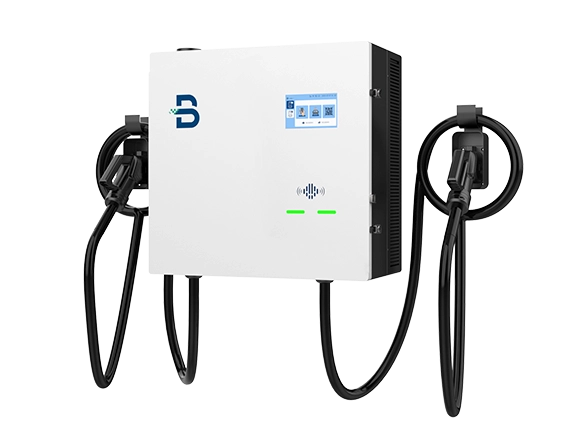
For mixed dwell-time locations, BENY New Energy offers a reference range spanning AC destination charging and higher-power DC charging formats. Compare the products against the site's available power, connector requirements, communications, payment plan, environmental exposure, and maintenance capability rather than treating the range as a single package.
Design access payment and customer support
Decide whether users authenticate with a room key, RFID card, mobile application, payment terminal, QR flow, or staff validation. Public users need clear pricing and instructions. Hotel guests need a process that still works when they arrive late. Staff need a separate policy if charging is limited or subsidized.
Assign responsibility for failed sessions, refunds, overstays, blocked bays, and damaged cables. A network portal can help monitor use and status, but front-desk or property staff still need a simple escalation procedure. Display support information where the driver encounters the charger.
Plan the parking experience and expansion
Place chargers where cable reach, accessible routes, lighting, drainage, signage, and vehicle circulation work together. Avoid creating bays that are convenient for combustion vehicles to occupy. If the first phase is small, install conduits and distribution provisions for the next credible phase where this is economical.
After launch, track successful sessions, energy delivered, occupancy, peak charging demand, help requests, and faults. The data will show whether the property needs more ports, different power, revised pricing, or stronger parking enforcement. Expansion should follow observed demand rather than a generic benchmark.